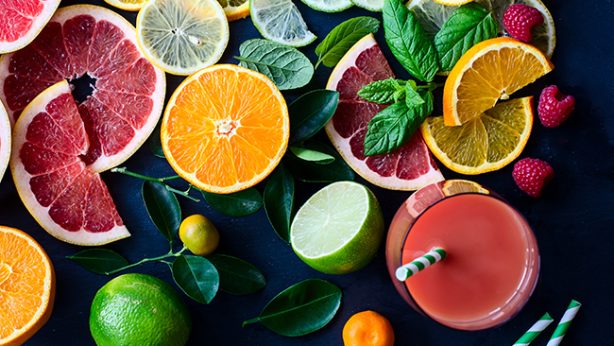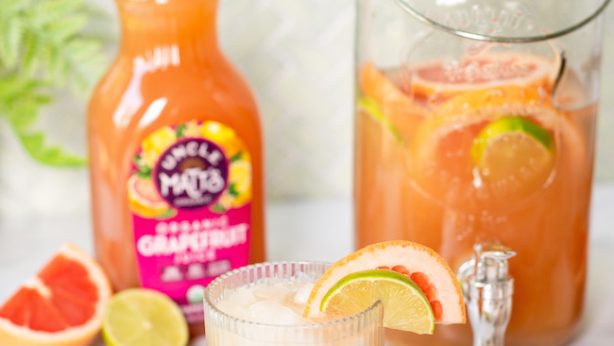
CLERMONT, FL — Uncle Matt’s Organic announced today that it will be adding 100% pure Florida organic grapefruit juice to its healthy line of organic fruit and juices.  The grapefruit juice, which is a delicious, flavorful blend of mellow Ruby Reds and robust Whites, with some juicy dark red Rios and Flames squeezed in for extra sweetness, will be available year round and debuts the first of October.

“We’re happy to finally announce the launch of our grapefruit juice,” says Matt McLean, CEO and founder of Uncle Matt’s. “By transitioning enough acreage to organic in our family of growers, we now have the fruit and volume to provide premium organic grapefruit juice. Customers are assured that the quality and supply is consistent with other Uncle Matt’s products and that no synthetic pesticides or fertilizers have ever been used in the growing process.”

Organic grapefruit juice is a great alternative for the morning juice glass with health benefits all its own. Uncle Matt’s not-from-concentrate, flash-pasteurized juice is packed with vitamin C and is a source of calcium, folic acid, phosphorus and potassium.  Not to mention, there’s even more health benefits derived from grapefruit’s powerful phytonutrients like free radical-fighting lycopene and disease-deterring limonoids.

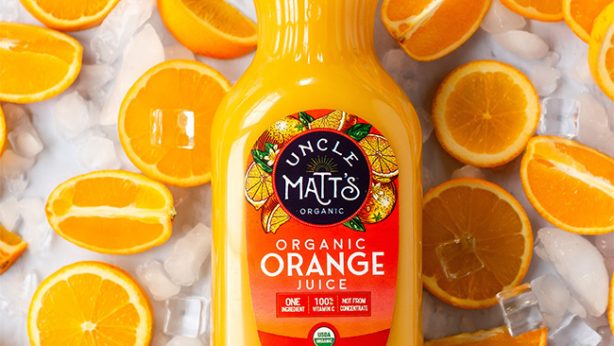
Uncle Matt’s grapefruit juice will be available nationwide through UNFI and Whole Foods and will carry the same pricepoint as its 59 oz. organic orange juice counterparts.

Uncle Matt’s and AllergySense have partnered to offer you the chance to win 5 VIP coupons for free 59 oz orange juice plus an organic cotton t-shirt!

Entering is easy, and the contest runs from August 4-11, 2010 (for complete contest details, click here) . Visit the AllergySense Facebook page or Uncle Matt’s Facebook page and become a fan. Tell us your favorite way to enjoy orange juice or enter your comment below. A winner will be contacted by August 12, 2010.

Annual grocery guide sets diverse table

Our annual Ethnic Grocery Guide is a favorite of mine because it reflects one of my favorite things — the diversity of Central Florida — and exemplifies why I think this is a great place for foodies.

These markets are scattered throughout Brevard, Lake, Orange, Osceola, Seminole and Volusia counties. We are updating the guide for 2010 and we need your help. Have we overlooked a few of your favorite places? Are you a business owner who wants to get the word out?

Send your tips to me via any of the marvelous forms of communication noted below. I’ll be taking your suggestions until 5 p.m. on Oct. 8. The guide will publish in Cooking & Eating on Oct. 20.

Slow Food Orlando goes international. Members of Slow Food Orlando are headed to Terra Madre in Turin, Italy, this fall. Terra Madre is an international network of food producers, chefs, educators, activists and students from more than 150 countries who all have the common interest and goal of global sustainability in food. The biennial event is hosted in the mother country of Slow Food — Italy. Delegates will have the opportunity to share innovative solutions and time-honored traditions for keeping small-scale agriculture and sustainable food production alive and well.

Slow Food Orlando (slowfoodorlando.org) is a chapter of Slow Food USA, a nonprofit educational organization dedicated to supporting and celebrating the food traditions of North America. This effort is supported through programs dedicated to taste education, defending biodiversity and building food communities.

Local delegates include Trish Strawn of Deep Creek Ranch in west Volusia County, Dale Volker of west Orange County’s Lake Meadow Naturals, Cinthia Sandoval of Wild Ocean Seafood Market in Port Canaveral, Oliver Kann of Heart of Christmas Farms and Tony Adams of Big Wheel Provisions, a pivotal participant in weekly Monday night Audubon Park Community Market gatherings, and Rebecca Reis-Miller, Slow Food Orlando co-founder.

Shop local, eat local, but stay food-safe. Farmers markets are great sources for fresh produce, but you need to be vigilant about food safety in these open-air centers. Fruit samples are often served on exposed trays that have been touched by many fingers. Wash your hands often and don’t chomp into that delicious fruit until you have time to thoroughly wash the produce at home.

What’s in season. Scorching August trims the amount of Florida produce available in supermarkets but you should be able to find good buys on avocados, okra and watermelons. Sounds like a swell trio to me. Clermont’s Uncle Matt’s, a local organic star, is showing its second crop of avocados (available now through January). Florida avocados tend to be larger and greener than their Mexican counterparts and deliver important health benefits. Florida avocados are naturally lower in fat and have fewer calories than the popular Hass avocado. They are a good source of dietary fiber, folate, potassium, as well as vitamins B-6 and C. Avocados are also a source of monounsaturated fat that may help to lower cholesterol.

Today on my blog, look for some of our favorite test kitchen recipes for avocados, okra and watermelons.

At the seafood counter, look for alligator, amberjack, clams, blue crabs, flounder, red grouper, spiny lobster, mahi mahi, oysters, shrimp, red snapper, yellowtail snapper, swordfish and yellowfin tuna.

Calling all cookbook authors. The Oct. 9 “Deltona Regional Library’s Authors Book Fair: Celebrating Writers and Readers” has more than 50 authors registered to date, but the organizers are still looking for local cookbook authors to join the lineup. The fair is a fundraiser sponsored by the Friends of Deltona Library. For more information check out Friendsofdeltonalibrary.org.

Food Editor Heather McPherson can be reached at 407-420-5498, hmcpherson@orlando sentinel.com and on Twitter @OS_thedish. Follow daily food news at her blog orlandosentinel.com/thedish.

The truth about quenching your thirst

Watch below and see Uncle Matt’s towards the end of the segment!

Visit msnbc.com for breaking news, world news, and news about the economy

WASHINGTON – Children and teens who drink 100 percent juice have higher intakes of key nutrients compared to non-consumers, according to a new study.

The study has been presented at the Experimental Biology (EB) 010 meeting.

Two new studies from researchers at the Louisiana State University Agricultural Center and Baylor College of Medicine clearly highlight the benefits of drinking 100 percent fruit juice.

Researchers used data from the 2003-2006 National Health and Nutrition Examination Survey (NHANES) to compare the diets of juice drinkers to non-consumers.

According to the findings, children 2-5 years of age who consumed fruit juice had significantly higher intakes of vitamin C, potassium, and magnesium and significantly lower intakes of added sugars compared to non-fruit juice consumers. In addition, higher intake of fruit juice was directly correlated with increased consumption of whole fruits and whole grains.

Children 6-12 years of age showed a similar positive association between intake of 100 percent juice and higher intakes of the key nutrients, as well as dietary fiber. Overall diet quality, as assessed by the Healthy Eating Index (a measure that evaluates conformance to federal dietary guidance) was higher in all fruit juice consumers assessed.

The researchers reported that a significantly higher percentage of non-fruit juice consumers 2-18 years of age failed to meet the recommended levels for several key nutrients, including vitamins A and C and folate, compared to those who drank 100 percent juice. Comparatively, a greater percentage of those in the fruit juice group exceeded Adequate Intake levels for calcium versus non-consumers.

“One hundred percent fruit juice plays an important role in the diets of children and teens, supplying important nutrients during a key period of growth and development,” notes lead researcher Dr. Carol O’Neil. “Drinking 100 percent juice should be encouraged as part of an overall balanced diet.”

A team of researchers from Washington State University and the University of Georgia have found that organic farming increases biodiversity among beneficial, pest-killing predators and pathogens. In potato crops, this led to fewer insect pests and larger potato plants. “It’s always been a mystery how organic farmers get high yields without using synthetic insecticides,” says co-author Bill Snyder, associate professor of entomology at Washington State University. “Our study suggests that biodiversity conservation may be a key to their success.”

Ecosystems with more total species, and more beneficial species that are relatively evenly distributed, are thought to be healthiest. The use of insecticides harms biodiversity by reducing the number of species and by making some species (often pests) much more common than others. The study, which was funded by USDA’s National Institute of Food and Agriculture (NIFA) and published in the July 1 edition of the journal Nature, shows that organic farming practices lead to many equally-common beneficial species, and that this reduces pest problems.

In potato fields that used conventional control practices (e.g., applications of broad-acting insecticides), usually just one species of beneficial predatory insect or pest-killing pathogen was common. In contrast, in organic fields several beneficial species were about equally common. Experiments showed that groups of evenly-abundant beneficial species, typical of organic farms, were far more effective at killing potato beetle pests. Because natural enemies are usually more even in organic crops of many different kinds, not just potato, these benefits could be widespread.

Sugar and Spice and Everything Gneiss posted a review of Uncle Matt’s OJ. We love our supporters! Read an excerpt below.

On my last trip to whole foods, I bought a container of Uncle Matt’s Orange Juice.  naturally, I got the pulp free version but they did have the other kinds.  (I think I established that i was a minority on my pulp-free passion… but, just so you know, I have tried the with-pulp version since that poll and I still prefer it smooth and junk-free.) Anyway, this is the best OJ I’ve ever had!

…this OJ, though – UNCLE MATT’S OJ – it was REALLY sweet and very thick and not watery at all.  YUM.  It tasted so thick it was almost milky.  Do you know what I’m talking about?  Sorta like a dreamsicle without the frozen part.

Read the full review here.

Disclaimer: The following includes a compilation of select study results or other reference information regarding the relationship between citrus consumption or nutrient intake and various diseases or other health conditions. This compilation may not necessarily represent a review of the entire body of literature for the topic(s) addressed.

General Health

  • One serving of 100 percent orange or grapefruit juice is more nutrient dense – that is, has more nutrients per calorie – than many commonly consumed 100% fruit juices such as apple, grape, pineapple, and prune.1
  • Intake of at least two servings of citrus fruit per week – specifically, oranges and tangerines – was associated with reduced mortality in elderly men and women compared to those consuming citrus less than once per week.2
  • A study of over 1,800 Japanese Americans residing in King County, Washington reported that consuming fruit and vegetable juices three times or more per week was associated with a 76% reduced risk for Alzheimer’s disease compared to consuming juices less often than weekly.3
  • A study in nine healthy females reported that the consumption of grapefruit juice reduced the risk of calcium oxylate crystallization and kidney stone formation in urine.4
  • A pilot study reports that inclusion of fresh grapefruit or grapefruit juice as part of the usual diet in obese individuals may have beneficial effects on weight loss and insulin sensitivity.5
  • Citrus can help adults achieve recommended intakes of vitamin C. Based on a national survey, adults achieving desirable intakes of vitamin C (that is, equal to or exceeding the Daily Value of 60 milligrams) on average consumed more than 5 daily servings of fruits and vegetables, of which at least one serving was citrus.6
  • Adequate vitamin C intake may help maintain eye health by reducing the risk for cataract and age-related macular degeneration.7,8,9,10
  • Folate may be associated with reduced risk for depression, age-related dementia or Alzheimer’s disease.11,12

Heart Health

  • A study of women and men in the Nurses’ Health Study and Health Professionals’ Follow-up Study found that highest consumption of citrus fruit juice was associated with a 25% reduced risk for ischemic stroke compared to lowest consumption.13
  • Studies in animals and humans report that consuming grapefruit or grapefruit juice may have positive effects on blood lipid levels.14,15,16,17,18 The flavonoid naringin, found in grapefruit, may play a role in these associated effects.17,19,20
  • Findings from the Iowa Women’s Health Study indicate that in the highest intake group for grapefruit there was a 15% reduced risk for coronary heart disease mortality compared to the lowest intake group.21
  • A study in men residing in Northern Ireland or France reported that the highest intake of citrus fruit was associated with a 36% reduced risk for an acute coronary event.22
  • Studies show that a diet that includes orange juice can increase plasma vitamin C concentrations23,24,25,26,27 and improve markers for oxidative stress23,25,26 and inflammation,23,24 which may reduce risk of heart disease.
  • Orange juice may help increase HDL, “good” cholesterol, and decrease the LDL-HDL ratio. Orange juice with added plant sterols may help improve cholesterol status by decreasing total and LDL cholesterol.27
  • Orange juice is an excellent source of vitamin C. Adequate intake of vitamin C from food sources and/or adequate blood levels of vitamin C have been associated with a reduced risk for death due to heart disease.29,30,31
  • Orange juice is a good source of potassium and is low in sodium. Adequate potassium intake has been shown to effectively lower blood pressure32,33 and reduce the risk for stroke.34,35,36 Doctors recommend getting potassium from foods rather than supplements.
  • Fresh citrus provides both soluble and insoluble fiber. Soluble fiber can help lower cholesterol and triglyceride levels, which may help reduce the risk of heart disease.37 Soluble and insoluble fibers may reduce the risk of cardiovascular disease by supporting healthy blood pressure and moderating blood glucose levels after a meal.38
  • Orange juice is a good source of folate which can help lower blood homocysteine concentrations. Elevated blood homocysteine is an independent risk factor for heart disease. Diets that include orange juice have been shown to lower homocysteine concentrations in the blood.39,40
  • Orange juice contains a wide array of “phytonutrients” such as flavonoids, limonoids and carotenoids. These are naturally occurring compounds that can act as antioxidants to help scavenge free radicals. Phytonutrients found in citrus appear to display anti-inflammatory and anti-cancer activities.41,42 High intakes of flavonoids are associated with lower risk of cardiovascular disease or lower mortality from cardiovascular disease.43,44

Cancer

  • In some studies, the consumption of higher levels of citrus fruits and juices has been associated with a lower risk of certain types of cancer.45
  • A meta-analysis of observational studies found that citrus fruit consumption was associated with a 62% decreased risk for oral cancer.46
  • A prospective study in almost 500,000 participants of the National Institutes of Health-AARP Diet and Health Study reports that consumption of citrus fruit was associated with a protective effect against esophageal squamous cell carcinoma.47
  • A multicenter case-control study of men residing in Europe who had laryngeal or hypopharyngeal cancer reported that the highest intake level of citrus fruit was associated with a 60% reduced risk for the development of second primary tumors compared to the lowest intake level.48
  • A case-control study in Uruguay reported that compared to the lowest consumption, highest consumption of citrus fruit was associated with over 70% reduced risk for squamous cell carcinoma of the esophagus.49
  • In a population-based case control study in eastern Nebraska, the highest intake of citrus fruit and juices was associated with a significantly reduced risk for esophageal adenocarcinoma compared to lowest intake.50
  • A case-control study in northern Italy found that individuals with the highest intake of citrus fruits had a 58% reduced risk for squamous cell cancer of the esophagus compared to the lowest intake. Citrus appeared to be especially beneficial in individuals with higher alcohol intakes.51
  • Findings from the Nurses’ Health Study indicate that the intake of higher levels of citrus fruit and juice was associated with a reduced risk for adenomas of the distal colon or rectum in women who had not previously been diagnosed with adenomas.52
  • A population-based case-control study conducted in Hawaii reported a 50% reduced risk for lung cancer in individuals with the highest intake of white grapefruit compared to lowest intake.53
  • A study of over 42,000 men in the Health Professional’s Follow-Up Study reported that the highest consumption of citrus juice was associated with a reduced risk for oral premalignant lesions compared to lowest intake.54
  • Adequate folate intake may help reduce the risk for some forms of cancer.55,56,57,58,59
  • Pink and Ruby Red grapefruit contain lycopene, a carotenoid that is not converted to vitamin A in the body, but has been associated with decreasing the risk of prostate cancer.60

Immunity

  • One cup (8 ounces) of orange juice is a nutrient-dense beverage that provides at least 100% of the Daily Value (DV) for vitamin C, plus other important nutrients such as folate, vitamin B6, and carotenoids, that are needed to help the body maintain a healthy immune system.61,62
  • A published summary of research studies suggests that vitamin C may have a modest effect on shortening the duration or lessening the severity of a cold if it is consumed before the onset of illness.63

Bone Health

  • Calcium-fortified citrus juices provide 300-350 milligrams of calcium – as much as a glass of milk – which can help enhance calcium intake and reduce the risk for osteoporosis. According to data from the 1999-2002 National Health and Nutrition Examination Survey, only 43% of men and 38% of women met the daily Adequate Intake (AI) recommendation for calcium. In the U.S., 10 million individuals are estimated to already have osteoporosis 64 and almost 34 million more are estimated to have low bone mass, placing them at increased risk for osteoporosis.65
  • 100% orange juice is a good source of potassium that may help your body fight osteoporosis by helping to neutralize acidity that could lead to loss of calcium from bone. Potassium intake has been positively associated with bone health in middle-aged women 66,67 and elderly men and women.68
  • Elevated blood homocysteine concentrations have been associated with an increased risk for osteoporotic fracture in older individuals.69,70
  • Magnesium may play an important role in bone health and diets rich in fruits and vegetables can optimize the intake of micronutrients required for bone health.71

Pre-Natal

  • An 8-ounce glass of orange juice is a good source of folate. Folate is essential for growth and development. It plays a key role in DNA formation and cell division, helps guard against one form of anemia, and may help reduce the risk of birth defects of the brain and spinal cord, known as “neural tube defects.”
  • To help reduce the risk of someday having a baby with a neural tube defect, all women capable of becoming pregnant need to get 400 micrograms of the synthetic form of folate, folic acid, every day while consuming food folate from a varied diet.72 Have a glass of orange juice to help increase the folate in your diet.
  • Vitamin C may play a role in a healthy pregnancy. Lower intakes or blood levels of vitamin C have been associated with lower birth weights and lengths,73 increased risk for gestational diabetes,74 elevated risk for premature membrane rupture,75 and pre-eclampsia.76

School Performance

  • Regular breakfast consumption for children and adolescents may help improve school performance and attendance.77,78,79,80 Orange or grapefruit juice is a great addition to a healthy breakfast.

Source: FloridaJuice.com

This is monumental news day for the organic industry. The President’s Cancer Panel Report released today exhorts consumers to choose food grown without pesticides or chemical fertilizers, antibiotics, and growth hormones to help decrease their exposure to environmental chemicals that can increase their risk of contracting cancer!

“Exposure to pesticides can be decreased by choosing, to the extent possible, food grown without pesticides or chemical fertilizers…Similarly, exposure to antibiotics, growth hormones, and toxic run-off from livestock feed lots can be minimized by eating free-range meat raised without these medications,” according to the report, “Reducing Environmental Cancer Risk: What We Can Do Now,” submitted to President Obama by Dr. LaSalle Leffall, Jr., an oncologist and professor of surgery at Howard University, and Dr. Margaret L. Kripke, an immunologist at the M.D. Anderson Cancer Center in Houston.

In a letter to President Obama, the panel stated “The American people—even before they are born—are bombarded continually with myriad combinations of these dangerous exposures. The Panel urges you most strongly to use the power of your office to remove the carcinogens and other toxins from our food, water, and air that needlessly increase health care costs, cripple our Nation’s productivity, and devastate American lives.”

This landmark report by the prestigious scientific panel recognizes, at the highest level, what your products provide — essentially endorsing our industry. OTA has issued a press release to tout the panel report and is exposing the organic connection through all media channels.

To read the full report, click here.

Innovative new products “will continue to receive a warm reception,” insists Matt McLean, CEO and founder of orange juice producer Uncle Matt’s Organic, Clermont, Fla. (352-394-8737), “as long as they are hitting their demographics correctly. I think organic is still a hot trend and is still trending upward even though the economy has set everybody back on a slower pace.”

Consumers, McLean adds, are looking for more wellness-oriented beverages, “anything that has a good angle at nutrition and nutrient density. The door is always open.”

Commodity prices were “okay until we had a freeze,” he notes. “Supply is dropping on the ground.”

McLean lauds many of the bigger, mainstream grocery chains that have become more sophisticated in their better-for-you beverage merchandising, whether they are among those creating special sections for wellness-oriented products or part of the group integrating them into conventional sets.

“They are both doing a pretty good job of making sure the consumer knows that it’s an organic item,” he says.

For example, Publix has a new brown tag that identifies all of its natural and organic items. Kroger is finding success with its Nature’s Marketplace, a store-within-a-store concept that comes complete with its own marketing materials.

Exciting new flavors, good-for-you ingredients and strong instore merchandising can help buffer refrigerated beverages against the gyrations of the economy. Barlows, for one, remains optimistic.

“We had a successful 2009 and look forward to and hope to have a similarly successful 2010,” he says.

Older Posts »


© Uncle Matt's Organic, All rights reserved. Contact us: 352.394.8737