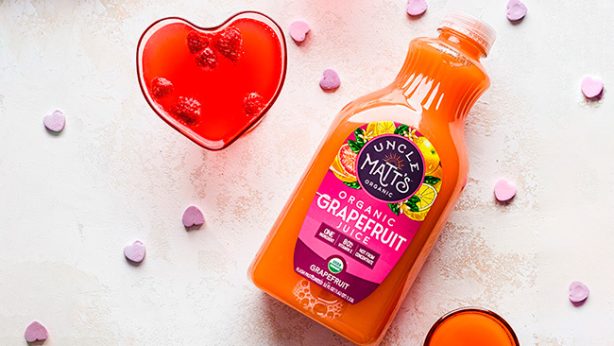
Thanks to Tara Burner, weight loss, health & fitness coach, for her glowing review of Uncle Matt’s OJ! We appreciate the support! To read her full review, click below.

http://www.taraburner.com/health-wellness/review-uncle-matts-organic-orange-juice.php

Thanks to Sustainable Food News for publishing this story! You can read it at:
http://sustainablefoodnews.com/story.php?news_id=13297

KUTZTOWN, PA — July 11, 2011 — Rodale Institute today announces the launch of Your 2 Cents, an innovative program that unites consumers and companies in support of the next generation of American farmers.  The Your 2 Cents program is designed to raise funds to support student scholarships for sustainable agriculture degrees, military veterans establishing careers in organic faming, and new organic farmers while establishing research grants for farmers in the Your 2 Cents network. Inaugural program partner Uncle Matt’s Organic, a company that offers premium organic citrus juice and produce, will kick off support by donating two cents per case good of their organic juice sold to the fund.

“America needs more farmers—organic farmers,” says Mark “Coach” Smallwood, Executive Director of Rodale Institute.  “One possible scenario of the project in action: help a student earn a degree in sustainable agriculture, grant them initial start-up costs for their farm operation, literally bring in the Marines to provide a labor force, and incorporate a research project in partnership with Rodale Institute.”

Companies like Uncle Matt’s Organic participate by donating two pennies per case good sold to the Your 2 Cents fund, which is governed by an advisory board consisting of representatives from companies partnering with Rodale Institute on the Your 2 Cents program. The advisory board will review applications quarterly, and allot funds for the education, training and establishment of new organic farmers who will feed America sustainably in coming generations.

“Rodale Institute is a pioneer and leader in organic agriculture and farm research,” says Matt McLean, founder and CEO of Uncle Matt’s Organic. “We are proud to partner with the organization on this endeavor to help support the next generation of American farmers.  We hope to inspire other companies to join the campaign to make Your 2 Cents a success for our future organic farmers.”

Rodale Institute is a 501(c)(3) nonprofit dedicated to pioneering organic farming through research and outreach. Celebrating its 30th anniversary in the fall of 2011, the Institute’s landmark Farming Systems Trial is the longest running side-by-side comparison of organic and conventional agriculture. For over sixty-years, the Institute has been committed to researching the best practices for organic farming and sharing findings with farmers and scientists around the world, advocating for policies that support farmers, and educating consumers about how going organic is the healthiest option for people and the planet.

Uncle Matt’s Organic is a Florida-based, family-owned company offering premium quality organic citrus juices and organic produce. All Uncle Matt’s products have no synthetic additives or preservatives. Produce and finished products are produced under the strict regulation and guidelines of Quality Certification Services, the largest and most respected organic certifier in Florida. Products are available in health food stores and at Whole Foods and other supermarkets nationwide. The company is an active member of Organic Trade Association (OTA) and supports the Organic Farming Research Foundation and the Rodale Institute.

More details are online at www.rodaleinstitute.org/your2cents

The antioxidant nobiletin, which occurs naturally in high levels in tangerines, may help individuals avoid the symptoms of metabolic syndrome and prevent them from developing type 2 diabetes, according to a new study from a group of University of Western Ontario researchers. Their study, which was published in the journal Diabetes, showed that the molecule prevented mice from experiencing elevated cholesterol levels, high blood pressure, impaired glucose tolerance, buildups of fat in the liver and excess weight gain, even when they were fed a high-fat diet.

The mice also showed no signs of type 2 diabetes. Murry Huff, who led the investigation, said that the nobiletin-fed mice were protected from obesity and the side effects that come with the condition. In particular, these mice had a much lower risk of developing atherosclerosis, which occurs when fat builds up in the arteries. Atherosclerosis is known to increase a person’s risk of suffering a heart attack or stroke.

For the study, the researchers fed two separate groups of mice a high-fat, Western-style diet that included high levels of simple sugars. The diet of one of these groups was supplemented with nobiletin. These mice had significantly better metabolic health and were much less likely to develop type 2 diabetes. Huff said that he and his team are considering testing the effects of the nutrient on a group of people who are at risk of developing type 2 diabetes or other metabolic conditions. Nobiletin appears to be much more potent than other similar antioxidants, and it could provide significant benefits to individuals whose diets increase their risk of cardiovascular and metabolic disorders. The study confirmed the findings of a 2004 investigation published in the journal Atherosclerosis, which showed that nobiletin may be a potent nutrient for fighting cardiovascular disease and type 2 diabetes.

Source: endocrineweb.com

Caution tape over burger.Are genetically modified foods safe to eat?

The conventional answer is “yes,” and it’s not hard to see why. Since their introduction in 1996, genetically modified (GM) or genetically engineered (GE) corn and soy seeds quickly conquered U.S. farm fields. Today, upwards of 70 percent of corn and 90 percent of soy are genetically modified, and these two crops form the basis of the conventional U.S. diet. Nor are they GM technology’s only pathway onto our plates. Nearly 80 percent of U.S. cotton is now genetically engineered, and cottonseed oil has emerged as a staple fat for the food industry. (USDA has figures on this.) Canola oil — another crop that has largely succumbed to genetic modification — is yet another common ingredient.

Given their swift path to ubiquity, wouldn’t we know by now if GMOs posed some threat? Since no obvious problems have come to the fore, some scientists — and certainly the agrichemical industry, which dominates GM seed production — have seen fit to declare them safe. Pamela Ronald, professor of plant pathology at the University of California, Davis, recently summed up the conventional view: “After 14 years of cultivation and a cumulative total of two billion acres planted, GE crops have not caused a single instance of harm to human health or the environment.”

Let’s leave aside Ronald’s claim about the environment (which is rendered suspect by the rise of herbicide-resistant “superweeds“) and dig into the human-health aspect. What we do know is that GMOs are not acutely toxic to eat. That is, we know that if you dine on a burger made from cows gorged on GM corn and soy, French fries cooked in oil from GM cottonseed, and soda laced with high-fructose syrup from GM corn, you’re not likely to keel over in agony. Tens of millions of people do it every day.

But what about more subtle, long-term effects — problems that public-health professionals call “chronic”? Here we enter less certain territory. With our highly processed diets largely deficient in fruits and vegetables, Americans have high and rising rates of chronic diseases like obesity and heart disease. Meanwhile, food allergies, autism, and non-alcohol-related liver disease have rocketed. It’s highly plausible that GMOs, which have existed in our diets for less than a generation, have emerged as another of many contributors to such long-term conditions.

So GMOs could theoretically be unsafe to eat. What does science tell us about the matter? Unfortunately, not much. Back in 1992, before the first GM seed had been commercially planted, the FDA declared GM foods to be “generally regarded as safe” — despite a complete absence of rigorous testing. And that meant that safety testing is completely unnecessary if, say, Monsanto wants to bring a novel crop to market. In a peer-reviewed 2004 paper [PDF] — which remains an extremely useful primer on regulation of GM crops —  William Freese and David Shubert show that the FDA made the “generally regarded as safe” decision over the objections of several agency scientists, who saw significant potential for harm. Moreover, when the agency rubber-stamps the introduction of a GM crop into the food supply, it does so using extremely non-committal language. As Freese and Shubert put it:

The review process outlined above makes it clear that, contrary to popular belief, the FDA has not formally approved a single GE crop as safe for human consumption. Instead, at the end of the consultation, the FDA merely issues a short note summarizing the review process and a letter that conveys the crop developer’s assurances that the GE crop is substantially equivalent to its conventional counterpart.

The authors quote from the letter the FDA sent to Monsanto on approval of Bt corn back in 1996:

Based on the safety and nutritional assessment you have conducted, it is our understanding that Monsanto has concluded that corn products derived from this new variety are not materially different in composition, safety, and other relevant parameters from corn currently on the market, and that the genetically modified corn does not raise issues that would require premarket review or approval by FDA. … as you are aware, it is Monsanto’s responsibility to ensure that foods marketed by the firm are safe, wholesome and in compliance with all applicable legal and regulatory requirements.

Shorter version: We’re approving this crop based on your word — don’t blame us if someone gets sick!

To put it more broadly, regulation of the safety of GM food is virtually nil, and research is scant and largely industry-funded. In a 2010 paper [PDF] in the journal Food Policy, researchers looked at all the papers on the health and nutritional effects of GM foods published in English between 1996 and 2009. Of the 94 studies they identified — not a large number, given the surge of GMOs into our diets over that period — 80 delivered “favorable” conclusions about the novel foods, while 10 had “negative” views and two were neutral. That sounds at first glance like a positive near-consensus around GMOs.

But then the researchers dug deeper and looked for industry ties. In 44 of the 94 total papers, one or more of the researchers had a financial or professional tie to the agrichemical industry. Of those 44, 43 had “positive” conclusions and one turned out “negative.” Meanwhile, 37 of the studies were done by independent researchers. Of those, 27 came back positive, eight came back “negative,” and two were “neutral.” In other words, near-complete consensus reigns among industry-linked scientists as to the safety of GM foods. But among independent scientists, the issue is much more contested.

In a peer-reviewed 2008 paper, Don Lotter demonstrates that only one independent long-term study has ever assessed how eating GMOs affects mammals. Funded by the Austrian government and released in 2008, that study initially seemed to reveal disturbing reproductive trouble in mice fed GMOs. But then in 2010, the Austrian government withdrew it from publication, citing insufficient data. I am trying to contact the study’s lead author, Austrian scientist Jurgen Zentek, for comment.

So where does all of this leave us? Obviously, in need of much more independent research. In April, a bit more trickled out from Quebec, Canada — and again, the results are unsettling. The study, published in the journal Reproductive Toxicology, focused on corn engineered to possess a trait from the bacteria Bt, which is toxic to a range of insects. So-called Bt corn is extremely common in the United States; according to the USDA, upwards of 60 percent of corn planted here has it. Since its introduction in the ’90s, its maker, Monsanto, has insisted that Bt corn must be safe, because the toxin embedded in it cannot survive the human digestive system.

The Quebec study (here’s the abstract) casts serious doubt on that bedrock assumption. Researchers checked blood samples of 39 pregnant women and 30 non-pregnant women for the presence of the toxin. None were exposed directly to Bt, but all had conventional diets. The results: The Bt toxin showed up in 93 percent of pregnant women and 80 percent of their fetuses. It was also present in 69 percent of non-pregnant women in the study.

So, 15 years after the introduction of GMOs, we know that they pose no threat of immediate, spectacular harm. That is, they won’t kill us suddenly. Whether they’re killing us slowly — contributing to long-term, chronic maladies — remains anyone’s guess.

Tom Philpott was Grist’s senior food writer until May 2011. He now writes for Mother Jones.

Source: http://www.grist.org/food-safety/2011-05-16-what-we-know-and-dont-know-about-the-safety-of-eating-gmos

Don’t throw away that banana peel!  Composting is a great way to introduce natural beneficial bacteria, fungi and nutrients into the soil while building organic matter  and helping make everything in your garden grow and taste better.

Learn below how to make your own compost with some practical, and easy, tips from eHow & Ben McLean, head of R&D for Uncle Matt’s.

1.  Collect food scraps usually headed for the garbage:  fruit and veggie peels, lettuce leaves, apple cores, egg shells and coffee grounds. Skip over any meat or dairy. You can even add shredded newspapers or grass clippings.

2. Designate an area to compost. This can be a hole in the ground or composting bin.

3. Start with a base layer of brush (old leaves and small twigs).

4.  Add a layer of your biodegradable scrap waste. You could mix in a bit of cow    manure at this point if you like.

5.  Lightly water your pile. The goal here is to allow for fermentation with proper aeration.

6.  Keep adding alternating layers of brush and scraps, keeping your pile loosely packed and well aerated. You’re looking for an internal temp of 160 degrees F. within a couple of days.

7. After three weeks, use a spading fork to dig into the pile and mix up the contents.  Turn it again after five more weeks.

From there, put it out in your garden at a rate of one pound for every 4 sq. ft. That’d be 50 lbs. of compost for a 200 sq. ft. garden (on the high side).

Source: Ben McLean III, head of R&D for Uncle Matt’s and http://www.ehow.com/how_2185497_own-compost.html.

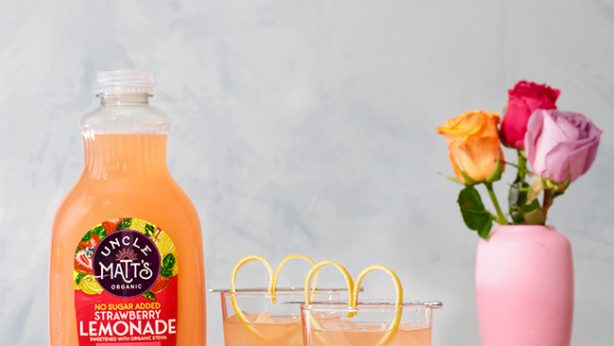
Uncle Matt’s announced today the next addition in its premium line of organic juices: not-from-concentrate, flash-pasteurized and refrigerated lemonade. Made from California-grown lemons picked at the height of the season, Uncle Matt’s lemonade is the perfect balance of tart and sweet for a taste that’s reminiscent of old-fashioned fresh-squeezed lemonade from a roadside stand.

“Our homestyle lemonade is the real deal: not-from-concentrate, refrigerated, and made from top-quality organic California-grown lemons,” says Matt McLean, founder and CEO of Uncle Matt’s. “We think it’s a perfect extension for our brand as we reach out to moms and families.”

The suggested retail is recommended at an affordable $4.99 everyday price, and $3.99 on promotion. Uncle Matt’s lemonade uses only organic ingredients and is offered in family-friendly 59-ounce size. As with all Uncle Matt’s products, no synthetic pesticides, herbicides or fertilizers are ever used in the growing process.

Uncle Matt’s Organic is a Florida-based, family-owned company offering premium quality organic citrus juices and organic produce. All Uncle Matt’s products have no synthetic additives or preservatives. Produce and finished products are produced under the strict regulation and guidelines of Quality Certification Services, the largest and most respected organic certifier in Florida. Products are available in health food stores and at Whole Foods and other supermarkets nationwide. The company is an active member of Organic Trade Association (OTA) and supports the Organic Farming Research Foundation.

This press release is presented without editing for your information. The Herb Companion does not recommend, approve or endorse the products and/or services offered. You should use your own judgment and evaluate products and services carefully before deciding to purchase.

Anybody that has a composting bin or compost pile at their house knows that old apple cores, banana peels and potato skins can be composted. But many people who compost at home are unaware of the sheer vastness of every day waste that can easily be thrown in their compost bin.Stuff You Can Compost

For example, did you know that you can compost an old tea bag? Old spices? Pencil shavings? How about sticky notes? Yes, each of those items can be composted!

In fact, there are many items that you can compost, and the following list will get you started with the first ninety-nine. And the best news? If everyone began to compost at home on a regular basis, the world’s landfills would be drastically reduced.

If you are composting for an organic garden use organic starting materials. Some of the items below I would not recommend for organic gardens. For clarity, I will specify those items below.

The Basics:

  1. All organic vegetable and fruit matter including rinds, skins, shells, seeds, cores and peels
  2. Old leaves & hay
  3. Used coffee grounds
  4. Paper coffee filters
  5. Grass clippings
  6. Egg shells

Unique Every Day Items

  1. Tea bags
  2. Peat moss
  3. Tree bark
  4. Old flowers
  5. Garden soil
  6. Old top soil
  7. Old bread
  8. Wheat bran
  9. Cooked grains
  10. Olive pits
  11. Pencil shavings
  12. Dust bunnies
  13. Toothpicks
  14. Business cards (Paper)
  15. Natural wine corks
  16. Toilet paper rolls
  17. Wrapping paper rolls
  18. Old loose leaf tea leaves
  19. Dried brown garden weeds (avoid composting weeds that go to seed)
  20. Spices and herbs that have lost their smell
  21. Nut shells (except walnut shells, which contain a chemical that can be toxic to plants)
  22. Wood chips and sawdust
  23. Soy products
  24. Wine and beer-making wastes
  25. Old dry cereals, crackers, chips, cookies, etc.
  26. 100% cotton swabs and Q-tips (do not compost plastic sticks)
  27. Wood fire ashes from grill or fire-place (also from smoking fish and other meats)
  28. Dirt in soles of shoes
  29. Facial tissues (unless soiled with chemical products)
  30. Old milk, ice cream, cream, etc. (in limited amounts)
  31. 100% cotton clothing (ripped into small pieces)
  32. 100% wool clothing (ripped into small pieces)
  33. Raffia decorations
  34. Crepe paper streamers
  35. Broken-down cereal boxes
  36. Natural wreaths, garlands and other natural holiday decor
  37. Chopped up Christmas trees
  38. Used Fabric sheets from the dryer

Non-Organic Compostable Items

  1. Paper bags (ripped into smaller pieces)
  2. Old Post-it Notes
  3. Any form of paper that has been soiled by food
  4. Pizza boxes (make sure to break them down into small pieces)
  5. Shredded newspapers
  6. Used paper plates without wax coatings
  7. Old mail and bills (make sure not to compost envelopes with the plastic windows)
  8. Paper or wood-based matches
  9. Animal manure and droppings
  10. Paper towels and towel rolls
  11. Leather belts, shoes, wallets, gloves (best if the leather is fairly old, as it will degrade slowly)
  12. Elmer’s glue
  13. Used masking tape
  14. Jell-O (gelatin)
  15. Paper muffin and cupcake cups
  16. Cage cleanings from small pets such as Guinea pigs, rabbits, birds and iguanas
  17. Labels
  18. Price tags
  19. Stale candy (remove wrapper, of course!)
  20. Cardboard and paper egg cartons
  21. Cardboard tampon applicators
  22. The boxes that surround many forms of cheeses
  23. Pure cellophane bags
  24. Paper Envelopes from your mail (Shredded up)
  25. Shredded catalogs and magazines (unless they have a very waxy cover)
  26. Chewing gum

Weird Stuff You Can Compost

  1. Feathers
  2. Old rope
  3. Stale catnip
  4. Dryer lint
  5. Dead houseplants
  6. Star fish (dead)
  7. Old Halloween pumpkins
  8. Electric razor trimmings
  9. Finger and toe nail clippings
  10. Hair – Both human and animal hair is compostable
  11. Ground bone and blood meal
  12. Old rawhide dog chews
  13. Old dog/cat foods
  14. Small pets that have died, like goldfish (Not recommended, but possible.)
  15. Urine (although can be quite smelly in the summer sun)
  16. Old cheeses
  17. Latex condoms and balloons
  18. Old beer, wine and liquor
  19. Crustacean shells (shrimp, crab, lobster, etc.)
  20. Tobacco wastes
  21. Bamboo products
  22. Old fish food
  23. Sheepskin condoms
  24. Shower loofahs (made from natural materials, such as sea sponge)
  25. Vacuum cleaner bag waste
  26. Granite dust
  27. Dolomite lime
  28. Liquid from canned fruits and vegetables
  29. Pure soap scraps

Source: Global Healing Center

Why trust organic?

The organic system is designed to verify that federally regulated organic production and processing methods are followed.

benefits of organic

That is why U.S. organic standards require:

One-hundred percent grapefruit juice – a dieter’s friend? A new study, published in Nutrition & Metabolism, concluded that enjoying a pre-meal snack of grapefruit, grapefruit juice or water as part of a reduced-calorie diet can be part of an effective weight loss strategy for obese adults.(1)

Researchers at Vanderbilt University found that obese adults who consumed half a grapefruit, about a half-cup (4.5 ounces) of 100 percent grapefruit juice or about a half-cup (4.5 ounces) of water before three main meals, while on a reduced-calorie diet, experienced significant decreases in weight, body mass index (BMI) and waist circumference. Following the 14-week study, participants experienced an average weight loss of 7.1 percent of their initial body weight. This translates to an average of about 15 pounds per person.

“There’s often a misconception that 100 percent fruit juice should be omitted by those on a weight loss plan,” says Heidi J. Silver, PhD, RD, Assistant Professor of Medicine, Vanderbilt Center for Human Nutrition. “However, this study shows that consumption of a half-cup of 100 percent grapefruit juice led to similar weight loss results as those who chose fresh grapefruit or water as a pre-meal snack three times daily. As with any food or beverage, it’s all about moderation while on a weight loss plan.”

Benefits of Grapefruit and Grapefruit Juice Consumption Go Beyond Weight Loss

While the study shows that participants who consumed a serving of grapefruit or 100 percent grapefruit juice before meals lost the same average weight as those who drank water, these individuals experienced additional potentially significant benefits not reported in the water-drinking group:

* Increase in HDL cholesterol – Participants who ate half a grapefruit or drank a half-cup of grapefruit juice experienced a significant increase in HDL cholesterol, often referred to as “good” cholesterol – the magnitude of increase in HDL-C could have significant cardiovascular benefits.
* Decrease in appetite – Those who enjoyed about a half-cup of grapefruit juice as their pre-meal snack reported a significant decrease in appetite.
* Increase in key nutrient intake – Daily consumption of fresh grapefruit or 100 percent grapefruit juice also led to a significant increase in vitamin C intake. Additionally, those who ate half a grapefruit as their pre-meal snack had the added benefit of increasing their fiber intake.

“These findings are noteworthy given that dietary fiber and vitamin C are generally under-consumed by the U.S. population,”(2) adds Gail Rampersaud, MS, RD, LDN, Assistant in Nutrition Research and Education, University of Florida. “Quite often, individuals inadvertently reduce nutrient intake while on a weight loss plan. Grapefruit and 100 percent grapefruit juice are nutrient-rich, making regular consumption an ideal and convenient way to obtain essential vitamins and minerals while maintaining a healthy, reduced-calorie diet.”

Source: FreshPlaza.com

By Sara ShecKler, CORRESPONDENT
April 20, 2011

CLERMONT — A mandatory class assignment for the Lake County regional science fair led Michaela McLean, an eighth-grader at Windy Hill Middle School, to recently win first place in the fair’s environmental science division.

Her project bested nearly 150 others submitted by middle-schoolers across the county.

“A Comparison of Organic and Synthetic Fertilizers and Their Nitrogen-Leaching Effect on the Florida Aquifer” netted Michaela, 13, a $50 savings bond from area business Brown and Caldwell and $100 from the Lake Soil and Water Conservation District as the overall county winner.

Michaela’s project “hit close to home,” said her mother, Annie McLean. Michaela’s father, Ben McLean III; her grandfather, Benny McLean Jr.; and her uncle Matt McLean work in the citrus industry and “hold a passion for farming sustainably and responsibly.” Matt McLean founded Uncle Matt’s Organic, a Clermont business, in 1999.

“Michaela comes from a Florida citrus-growing family dating back five generations,” her mother said.

Michaela’s project confirmed that when nitrogen rates were equal, organic fertilizer sources would leach much less nitrogen than their synthetic counterparts. Her findings have applications for environmental and human health, the purity of the Floridan aquifer and the state’s drinking-water supply.

“I am very happy about winning and feel a sense of accomplishment,” Michaela said. “The project took a lot of hard work and I am glad to see that it paid off.”

She chose her topic “because my family has a passion for growing citrus, especially organic,” said Michaela, who is in Windy Hill’s drama program and also has been a competitive dancer for the past seven years with Shooting Stars School of Performing Arts in Clermont.

Source: Copyright © 2011, Orlando Sentinel

« Newer Posts - Older Posts »


© Uncle Matt's Organic, All rights reserved. Contact us: 352.394.8737